
The 7th Barcelona Conference on Education (BCE2026)

November 05-09, 2026 | Held in Barcelona, Spain (and online)


International, Intercultural, Interdisciplinary

The Barcelona Conference on Education (BCE2026) will be held alongside The Barcelona Conference on Arts, Media & Culture (BAMC2026) as a part of the IAFOR European City Conference Series, and many of the sessions will concentrate on areas at the intersection of education and the arts and humanities. In keeping with IAFOR’s commitment to interdisciplinary study, delegates at either conference are encouraged to attend sessions in other disciplines. Registration for either conference will allow delegates to attend sessions in the other. We expect the resultant professional and personal collaborations to endure for many years, and we look forward to seeing you in Barcelona and online!

Barcelona Series Banner


The International Academic Forum (IAFOR) and the IAFOR Research Centre at the Osaka School of International Public Policy (OSIPP) at The University of Osaka, Japan, invite you to join The 7th Barcelona Conference on Education, running alongside The 7th Barcelona Conference on Arts, Media, and Culture. With an open call for papers, this event offers an engaging exploration of Education, Arts, Media, and Culture's latest advancements, inspired by diverse global ideas. Rooted in international, intercultural, and interdisciplinary foundations, BCE/BAMC2026 provides exceptional networking, professional development, and opportunities to present and publish contemporary ideas for academics at all career stages.

Throughout its history, Spain has served as a bridge connecting European and Arabic thought, having been conquered by both Romans and Arabs. This historical intersection became the cradle from which Arab intellectualism spread into Europe, showcasing the potential for different cultures to thrive and mutually influence one another within the same geographical space. Situated at the crossroads of Europe and North Africa, with the magnificent Mediterranean Sea as its backdrop, Barcelona has long been a focal point for intercultural communication and exchange and a harmonious coexistence of various cultures and ideas.

Today, this legacy continues to thrive in the city. Barcelona not only boasts its status as an international hub, seamlessly blending tradition and modernity, but it also serves as a hub of political and cultural uniqueness. As the epicenter of Catalonian separatism, Barcelona is a living testament to a politically active civil society composed of a distinct cultural and linguistic minority that ardently fights for its rights. Barcelona is where the realms of multiculturalism, linguistic diversity, political activism, technology, and global communication intersect, making it an ideal setting to explore interdisciplinary themes and collaborate with scholars from around the world.

In this dynamic and globally connected city, our conference, with a thematic focus encompassing Education, Arts, Media, and Culture, provides an opportunity to engage with a rich tapestry of ideas, cultures, and perspectives. Barcelona is where the realms of multiculturalism, linguistic diversity, political activism, technology, and global communication intersect, making it an ideal setting to explore interdisciplinary themes and collaborate with scholars from around the world.

In keeping with IAFOR’s commitment to interdisciplinary study, delegates at either conference are encouraged to attend sessions in other disciplines. Registration for either conference will allow delegates to attend sessions in the other. We expect the resultant professional and personal collaborations to endure for many years, and we look forward to seeing you in Barcelona and online!

The BCE2026 Programme Committee


Key Information
  • Venue & Location: Held in Barcelona, Spain (and online)
  • Dates: Thursday, November 05, 2026 ​to Monday, November 09, 2026
  • Early Bird Abstract Submission Deadline: May 14, 2026*
  • Final Abstract Submission Deadline: July 23, 2026
  • Registration Deadline for Presenters: September 03, 2026

*Submit early to take advantage of the discounted registration rates. Learn more about our registration options.


Call for Papers

The BCE Programme Committee welcomes papers from a wide variety of interdisciplinary and theoretical perspectives, and submissions are organised into the following streams:

  • Teaching & Learning
  • Educational Structures
  • Community & Society
  • Language & Culture
  • Psychology, Mind & Brain
  • Innovation & Technology
  • Special Themes and Areas of Focus

Plenary Speakers

To be announced

  • Anne Boddington
    Anne Boddington
    IAFOR, Japan
  • Donald E. Hall
    Donald E. Hall
    Binghamton University, United States

IAFOR's Conference Themes for 2025-2029
IAFOR Themes 2025-2029
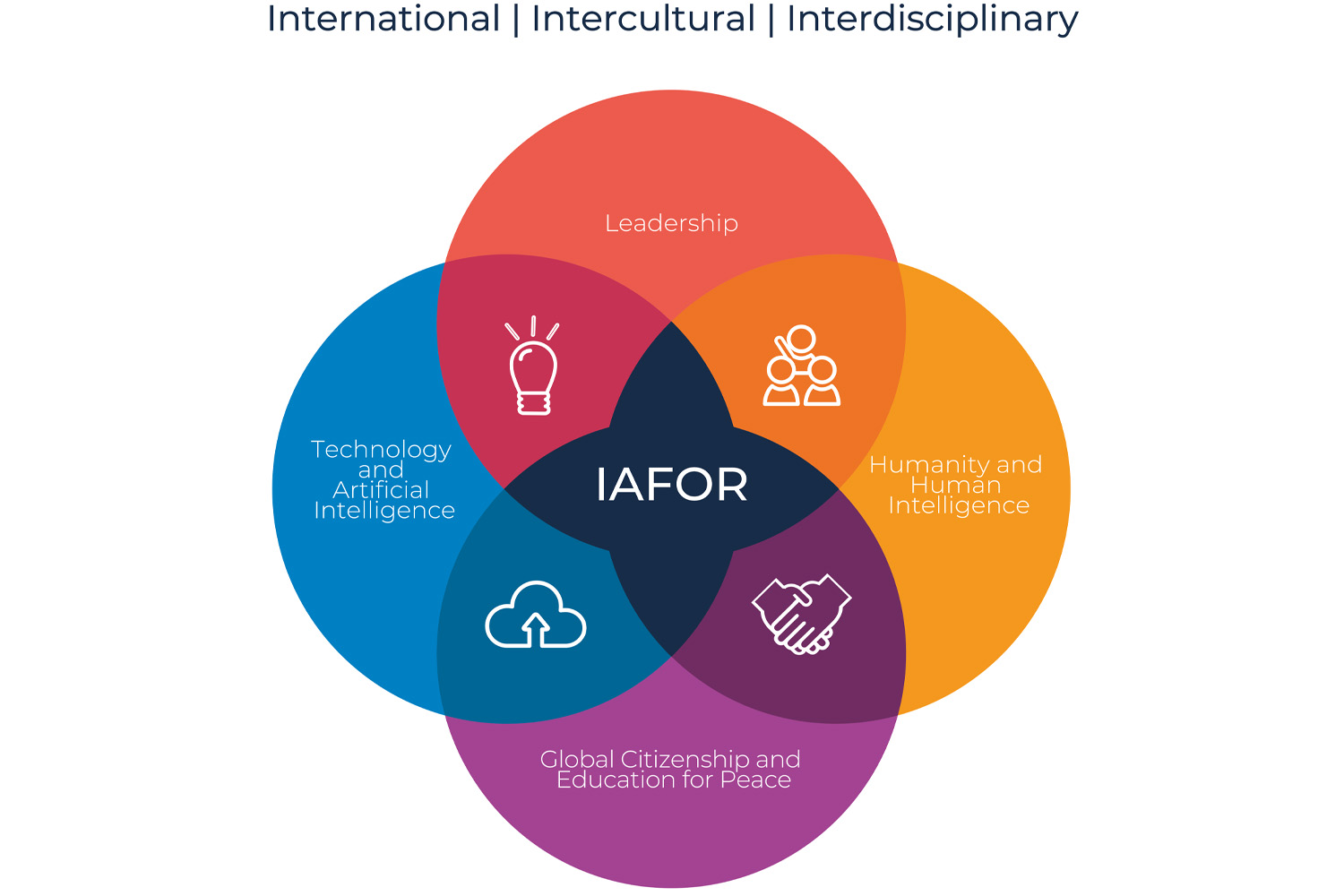
Our selected themes for 2025-2029 bring together ideas and encourage research and synergies in the following areas:

  • Technology and Artificial Intelligence
  • Humanity and Human Intelligence
  • Global Citizenship and Education for Peace
  • Leadership
  • Our four themes can be seen as standalone themes, but they are also very much in conversation with each other. Themes may be seen as corollaries, complementary, or in opposition/juxtaposition with each other. The themes can be considered as widely as possible and are designed, in keeping with our mission, to encourage ideas across the disciplines.


    Read Last Year's Conference Report


    Conference News


    Sponsorship & Exhibition

    Sponsorship & Exhibition

    Sponsor the Event

    Enhance your brand visibility among a global audience of academics, policymakers, and professionals.

    IAFOR Conference Experience

    Exhibit at the Event

    Showcase your organisation or services in a dynamic conference setting.


    About IAFOR’s Education Conferences

    IAFOR promotes and facilitates new multifaceted approaches to one of the core issues of our time, namely globalisation and its many forms of growth and expansion. Awareness of how it cuts across the world of education, and its subsequent impact on societies, institutions and individuals, is a driving force in educational policies and practices across the globe. IAFOR’s conferences on education have these issues at their core. The conferences present those taking part with three unique dimensions of experience, encouraging interdisciplinary discussion, facilitating heightened intercultural awareness and promoting international exchange. In short, IAFOR’s conferences on education are about change, transformation and social justice. As IAFOR’s previous conferences on education have shown, education has the power to transform and change whilst it is also continuously transformed and changed.

    Globalised education systems are becoming increasingly socially, ethnically and culturally diverse. However, education is often defined through discourses embedded in Western paradigms as globalised education systems become increasingly determined by dominant knowledge economies. Policies, practices and ideologies of education help define and determine ways in which social justice is perceived and acted out. What counts as "education" and as "knowledge" can appear uncontestable but is in fact both contestable and partial. Discourses of learning and teaching regulate and normalise gendered and classed, racialised and ethnicised understandings of what learning is and who counts as a learner.

    In many educational settings and contexts throughout the world, there remains an assumption that teachers are the possessors of knowledge which is to be imparted to students, and that this happens in neutral, impartial and objective ways. However, learning is about making meaning, and learners can experience the same teaching in very different ways. Students (as well as teachers) are part of complex social, cultural, political, ideological and personal circumstances, and current experiences of learning will depend in part on previous ones, as well as on age, gender, social class, culture, ethnicity, varying abilities and more.

    IAFOR has several annual conferences on education across the world, exploring common themes in different ways to develop a shared research agenda which develops interdisciplinary discussion, heightens intercultural awareness and promotes international exchange.

    About IAFOR

    "International, Intercultural, Interdisciplinary"

    Founded in 2009, The International Academic Forum (IAFOR) is a global interdisciplinary scholarly association that brings together scholars from around the world. Through research collaborations, publications, and international conferences, it connects academics across disciplines and regions. IAFOR's main administrative office is in Nagoya, Japan, and its research centre (The IAFOR Research Centre) is in the Osaka School of International Public Policy (OSIPP), a graduate school of The University of Osaka. Through its international, intercultural and interdisciplinary conferences, research, and publications, IAFOR is a network hub for interdisciplinary discussion across Asia and beyond.
    IAFOR Main Site | IAFOR Research Archive | IAFOR Research Centre

    Anne Boddington
    IAFOR, Japan

    Biography

    Professor Anne Boddington is Executive Vice-President and Provost of IAFOR, and oversees the academic programs, research and policies of the forum.

    Anne Boddington is Professor Emerita of Design Innovation and has held executive and senior leadership roles in Higher Education including as Dean of Arts & Humanities at the University of Brighton, Pro Vice Chancellor for Research, Business & Innovation at Kingston and Pro Vice Chancellor for Research and Knowledge Exchange at Middlesex University.

    In 2022 she concluded chairing the Sub Panel (32) for Art & Design: History, Practice & Theory as part of the Research Excellence Framework (REF2021) and has extensive experience in the governance and conduct of peer review, research evaluation and assessment in REF2014 (Sub Panel Deputy Chair and Equality Diversity Advisory Panel [EDAP]) and RAE2008. A former member of AHRC’s Advisory Board, she is the current Chair of the Advisory Board for the UKRI’s National Interdisciplinary Circular Economy Research (NICER) programme (£30M), Deputy Chair and a Trustee of the Design Council, the government’s strategic advisor for design, and a member of both the InnoHK Scientific Committee (Hong Kong) and the Hong Kong Council for Accreditation of Academic and Vocational Qualifications (HKCAAVQ).

    Since the 1990’s Anne has worked across the UK and internationally with a wide range of quality assurance, professional, statutory, and regulatory bodies in the UK, Europe, the Middle East, Hong Kong, and India.

    As an independent consultant she now works as a strategic advisor and mentor and is committed to promoting equity, diversity, and inclusion in practice, developing effective governance, supporting career development, reducing bureaucracy, and improving organisational design, integrity, and productivity in the changing workplace.


    Previous Presentations

    Panel Presentation (2025) | Soft Power in Contested Spaces: Education, the Arts, Language, and Media for Peace
    Donald E. Hall
    Binghamton University, United States

    Biography

    Donald E. Hall is Provost and Executive Vice President for Academic Affairs at Binghamton University (SUNY), USA. He was formerly Dean of the Faculty of Arts, Sciences, and Engineering at the University of Rochester, USA, and held a previous position as Dean of Arts and Sciences at Lehigh University, USA. Provost Hall has published widely in the fields of British Studies, Gender Theory, Cultural Studies, and Professional Studies. Over the course of his career, he served as Jackson Distinguished Professor of English and Chair of the Department of English (and previously Chair of the Department of Foreign Languages) at West Virginia University. Before that, he was Professor of English and Chair of the Department of English at California State University, Northridge, where he taught for 13 years. He is a recipient of the University Distinguished Teaching Award at CSUN, was a visiting professor at the National University of Rwanda, was Lansdowne Distinguished Visiting Scholar at the University of Victoria (Canada), was Fulbright Distinguished Chair in Cultural Studies at Karl Franzens University in Graz, Austria, and was Fulbright Specialist at the University of Helsinki. He has also taught in Sweden, Romania, Hungary, and China. He served on numerous panels and committees for the Modern Language Association (MLA), including the Task Force on Evaluating Scholarship for Tenure and Promotion, and the Convention Program Committee. In 2012, he served as national President of the Association of Departments of English. From 2013-2017, he served on the Executive Council of the MLA.

    His current and forthcoming work examines issues such as professional responsibility and academic community-building, the dialogics of social change and activist intellectualism, and the Victorian (and our continuing) interest in the deployment of instrumental agency over our social, vocational, and sexual selves. Among his many books and editions are the influential faculty development guides, The Academic Self and The Academic Community, both published by Ohio State University Press. Subjectivities and Reading Sexualities: Hermeneutic Theory and the Future of Queer Studies were both published by Routledge Press. Most recently he and Annamarie Jagose, of the University of Auckland, co-edited a volume titled The Routledge Queer Studies Reader. Though he is a full-time administrator, he continues to lecture worldwide on the value of a liberal arts education and the need for nurturing global competencies in students and interdisciplinary dialogue in and beyond the classroom.

    Professor Donald E. Hall is a Vice-President of IAFOR. He is Chair of the Arts, Humanities, Media & Culture division of the International Academic Advisory Board.


    Previous Presentations

    Keynote Presentation (2024): The Work of the University in Perilous Times
    Keynote Presentation (2023): There Is No New Normal